

Frontier investors seek answers on the ground – what did the trip to Central Asia teach Aktia’s EMD team?
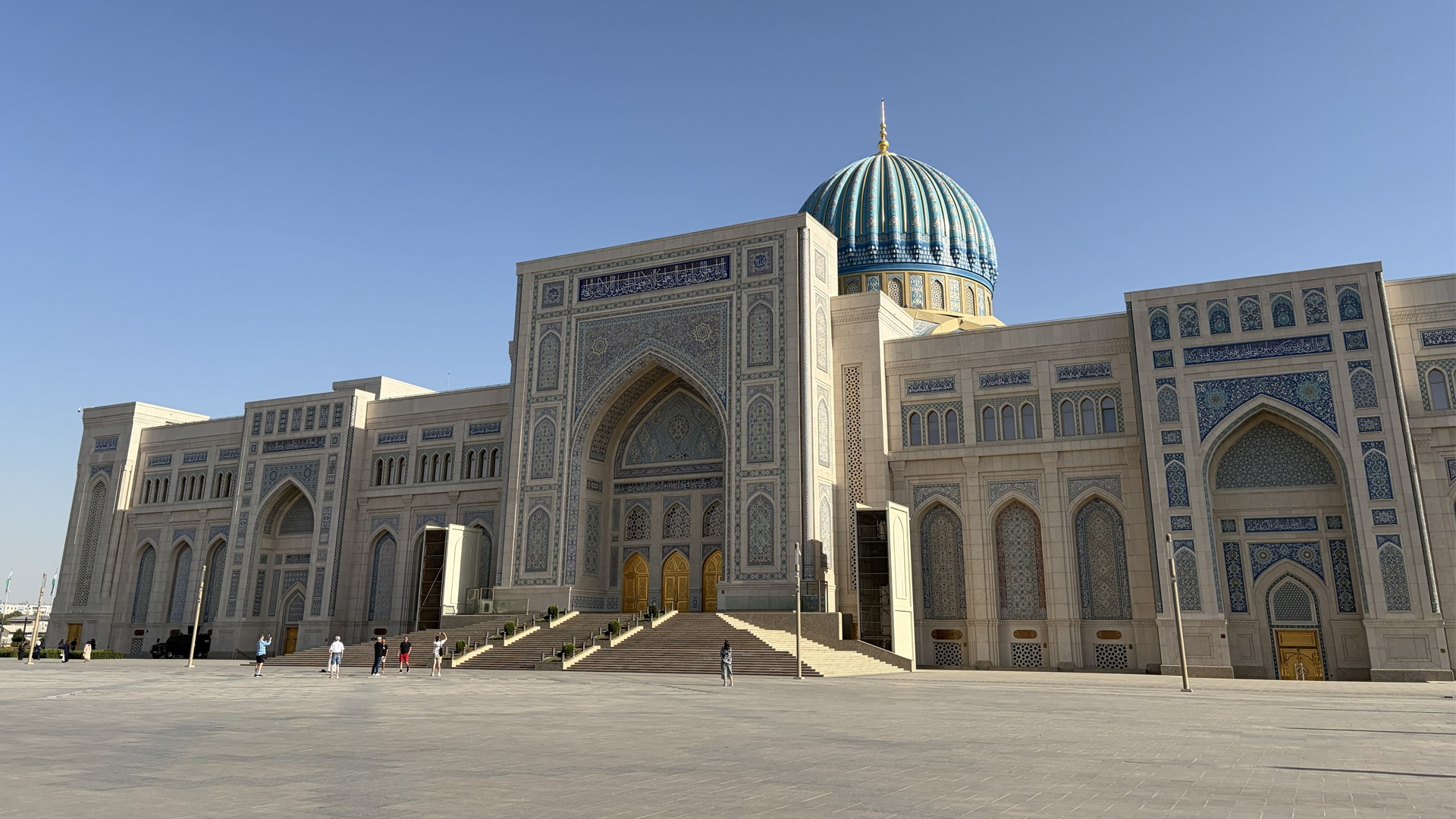
Aktia’s Emerging Market Debt team travelled to Kazakhstan and Uzbekistan in September together with a group of clients. The trip reinforced our investment theses, deepened our understanding of local market conditions, and gave clients greater visibility into the work that forms the foundation of Aktia’s investment decisions.
Frontier market insight cannot be gained from reading reports alone. For Aktia’s EMD team, market insight is built through visits to target countries, face-to-face meetings, and countless questions.
”We do not want to base our decisions on other people’s analyses. We want to verify our investment theses ourselves, meet people and understand what is really happening in the market,” says Henrik Paldynski, head of the Aktia Emerging Market Debt team.
Kazakhstan and Uzbekistan are young states whose institutions and markets are still at an early stage of development. According to Paldynski, both countries understand the need to expand the growth base beyond raw materials. The growth potential makes them interesting for frontier investors, but the associated risks must also be assessed realistically.
“Emerging markets are emerging markets for a reason. From an investor’s perspective, the key is to identify the risks, ensure they are adequately compensated for, and assess whether the country is moving in the right direction,” says Paldynski.
On the ground you hear things that do not make it into the reports
During their visit, Paldynski and his team met with representatives of the central bank, the ministry of finance, local banks, development financiers, embassies and local investors. The purpose of the discussions was not to arrive at a single definitive answer, but to form a comprehensive picture as close to the truth as possible.
"Everyone we met has their own perspective and agenda. We ask the same questions of different people to make sure the story is consistent,” Paldynski says.
Frontier markets are not as efficient or transparent as developed markets, and public information is not always readily available. The discussions highlight nuances that are not found in the official reports. According to Paldynski, some of the observations reinforce the team's views, while others challenge them and prompt a reconsideration.
”In Uzbekistan, we were reassured that the country has continued its reforms and kept debt levels under control. Meanwhile, conversations in Kazakhstan showed that inflation may not slow down as quickly as the market has expected.”
The observations from the trip are not treated as isolated travel impressions. Instead, they are integrated into the team's analysis, risk assessment, and portfolio decision-making.
”When qualitative insights are combined with quantitative analysis and a long experience of these markets, they can, at best, strengthen the investment thesis,” says Paldynski.
Visits to target countries are integral to the portfolio management process
The trips encapsulate what frontier market investing is ultimately about: selecting investment opportunities, learning, and gaining a deeper understanding of the markets. In that sense, they are due diligence at its purest.
"The learning curve is really steep for a while. In the best case, you may even fall in love with the country, although this should not influence investment decisions,” Paldynski says.
One of the most memorable moments of the trip was a visit to the Central Bank of Kazakhstan. One of the hosts noted that Aktia was the first asset manager to visit them independently, outside of the context of visits organised by global investment banks. It is a small but important sign of genuine interest.
”Investing in these markets ultimately comes down to trust, but trust cannot be built from a distance. It comes from being present, building local relationships, and returning to the same markets time and again,” Paldynski emphasises.
The investment process was made tangible for clients
Domestic and German institutional investors joined the trip, gaining a first-hand view of how the team creates its view of frontier markets while also having the opportunity to ask questions of their own.
”The clients saw a side of the process that they had only heard about before. When we sit together in the same meetings, listen to the discussions and ask questions, the understanding of the products and the work behind them deepens,” says one of Aktia’s hosts, Client Executive Erik Ingman.
Ingman represents Aktia's international sales and regularly meets the bank's institutional customers. According to him, it is important for Aktia's asset management to be able to offer personalised service that large asset management companies cannot always provide. Institutional investors appreciate close cooperation and the opportunity to deepen their understanding of more niche investment opportunities.
”It is much easier to discuss these markets with clients when you have been there yourself. Experience helps to open our investment process in a credible way and to answer questions with concrete examples,” Ingman emphasises.
Want to learn more about the EMD-team´s trip to Central Asia?
Read the Trip Notes report here.
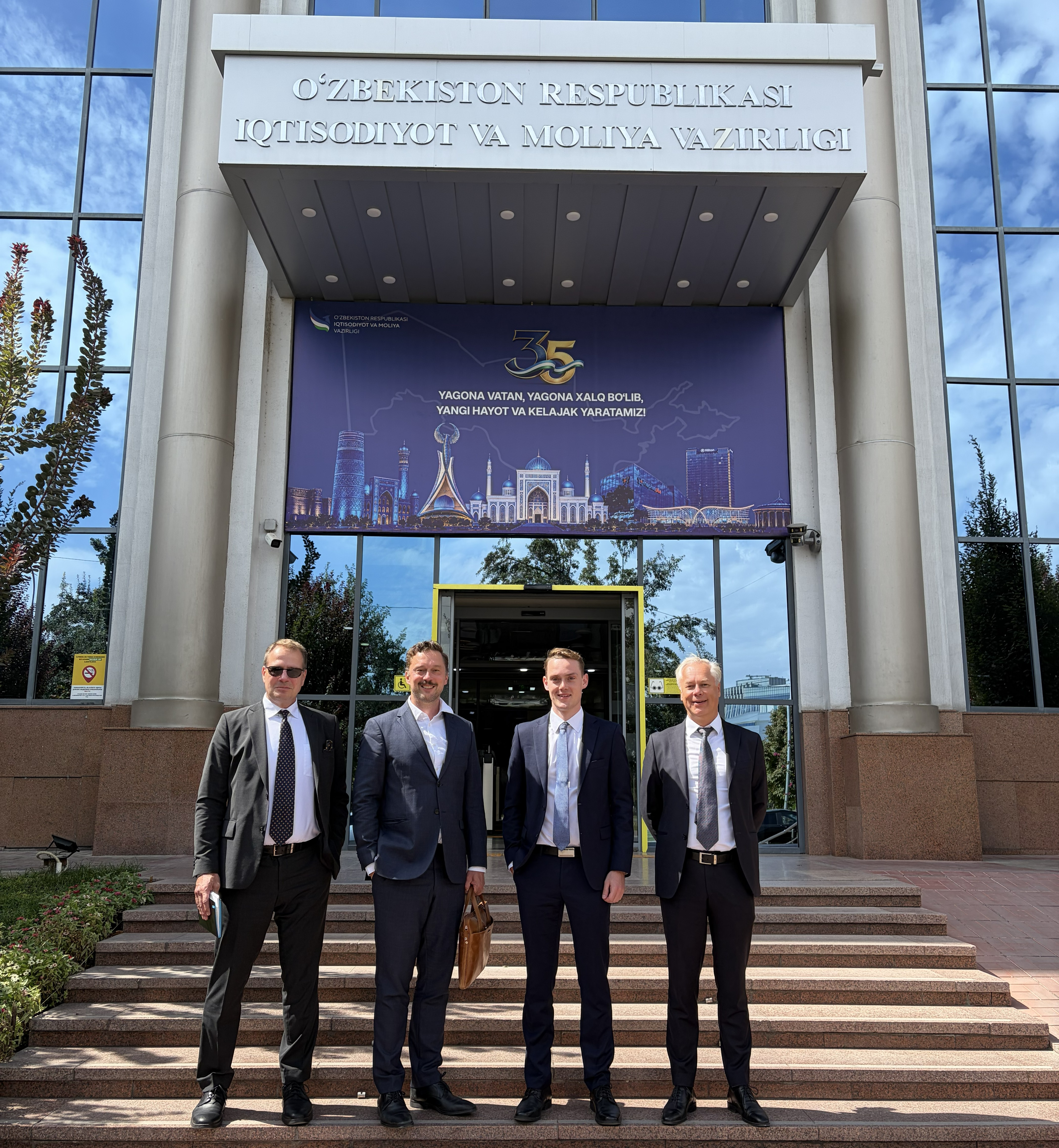
In the picture, from left to right: Aktia´s Senior Client executive Antti Rikka, Henrik Paldynski, Head of the Aktia Emerging Market Debt team, Client Executive Erik Ingman and Petri Kallio, Portfolio Manager at Veritas, who also joined the trip.
Responsible AI doesn't happen by accident
Artificial intelligence offers enormous opportunities for the financial sector. However, responsible AI use requires more than just new technology. The use of AI at Aktia is guided by a systematic governance model, aimed at enabling innovation in a safe, transparent and sustainable way.
As AI becomes more widespread, organisations need to be able to manage the risks as systematically as they manage the opportunities. AI governance is now more important than ever.
Built on trust
In the financial sector, trust is at the core of what we do. Customers, investors and other stakeholders must be able to trust that their data and funds are handled responsibly. The same is true for AI. It must be used safely, responsibly and in a way that builds trust.
"At Aktia, responsible AI means that we know where AI is used, who is responsible for it and how Ai-related risks are managed. That is why we have an AI governance model that helps us identify and address AI-related risks in a systematic and consistent manner," says Oskari Kurki, Chief Information Officer at Aktia.
Aktia’s AI governance model is based on both the company’s own responsible AI objective and the EU AI Act, which was adopted in 2024 and aims to foster trustworthy AI in Europe.
A strong foundation enables scaling
At Aktia, the implementation of the AI governance model is managed by the cross-functional AI Management Team comprising representatives from all business areas, risk functions, and other key functions. The team ensures that AI is used in Aktia in a business-oriented, controlled and responsible manner, while supporting strategic growth targets.
”The governance model provides clear rules and responsibilities for the use of artificial intelligence. Once the foundations are in place, AI can be used more widely, faster and more safely. Good governance does not slow down innovation, but enables it,” says Kurki.
Aktia’s AI governance model has been developed in collaboration with the consulting firm Ernst & Young.
”Aktia’s AI journey is a great example of how to build a strong foundation for the use of AI by relying on the company’s own values, business, key industry standards, and regulation. The EY Responsible AI governance model has been adapted to meet Aktia’s needs with the help of EY’s local experts, together with Aktia,” says Petri Vuorinen, partner at EY.
According to Oskari Kurki, the next phase of AI does not necessarily mean more AI, but rather more responsible AI.
”Our goal is not just to use AI. We want to do it in a way that earns the trust of our customers, our employees and our stakeholders also in the future.”